Autonomous rollers complete their first highway resurfacing job with no operator in the seat
Two driverless compactors followed a paver across 14 lane-kilometres, hitting density targets on every pass logged by the state inspector.
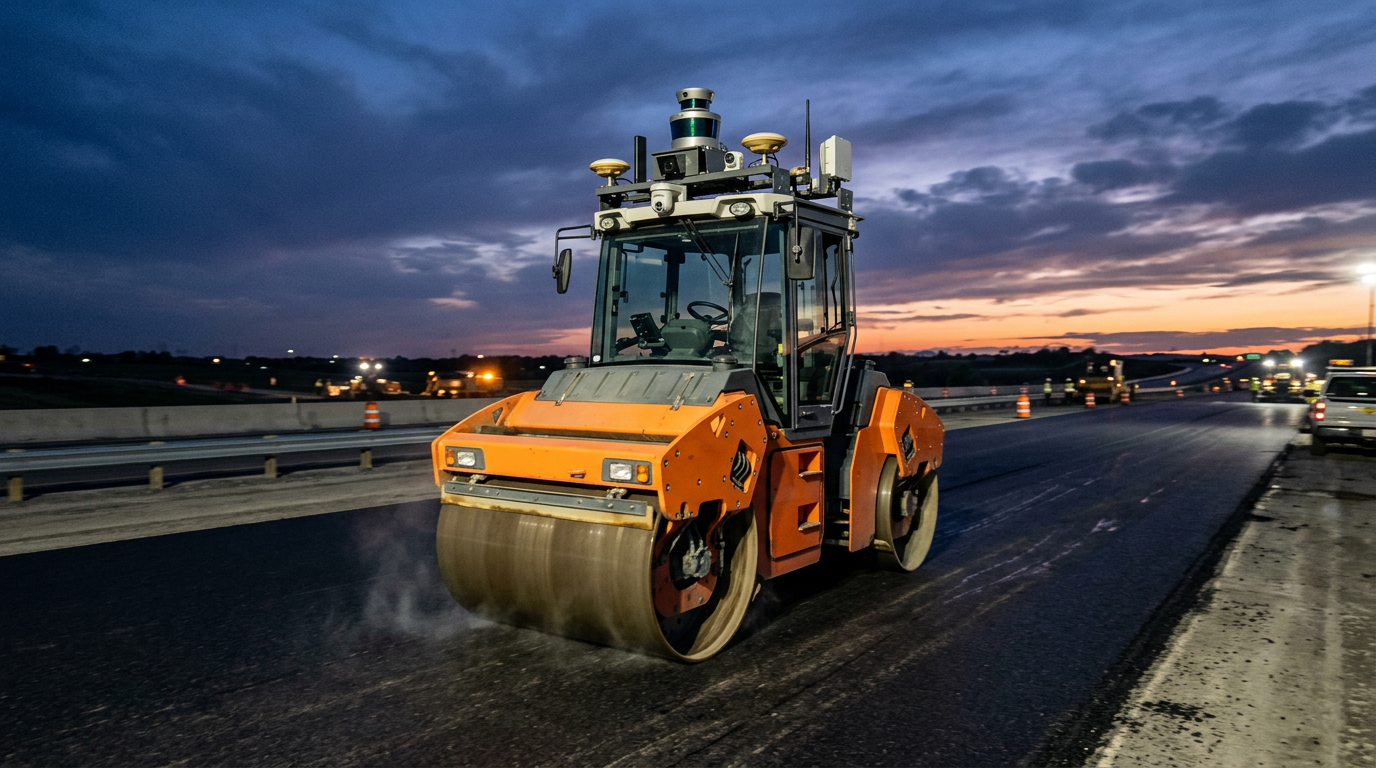
A resurfacing contractor in the US Pacific Northwest has completed what it describes as the first production highway job paved with fully driverless compaction. Two Halvard AR-10 tandem rollers worked behind a conventional paver over four night shifts, covering 14 lane-kilometres.
Each roller mapped the fresh mat using lidar and infrared temperature sensors, then planned its own passes to hit a target number of vibratory and static passes while the asphalt was within the right temperature window. A single technician supervised both machines from a truck at the shoulder.
Why compaction is a good first job
Rolling is repetitive, happens in a closed lane, and follows a precise pattern — exactly the kind of work that autonomy handles well. It is also a job where operator fatigue on night shifts can lead to missed passes and soft spots that fail years later.
The state inspector's core samples met density targets across the job, and the contractor says the pass maps gave it a documented record it could hand to the agency for the first time.
“The machine doesn't get tired at 3 a.m. and it doesn't guess. It shows you exactly where it went and how many times.”
- Autonomy
- Road building
- Compaction