Forage harvesters use onboard sensors to adjust chop length on the go
Near-infrared sensors in the spout read crop moisture and adjust chop length automatically, aiming for better silage and less fuel.
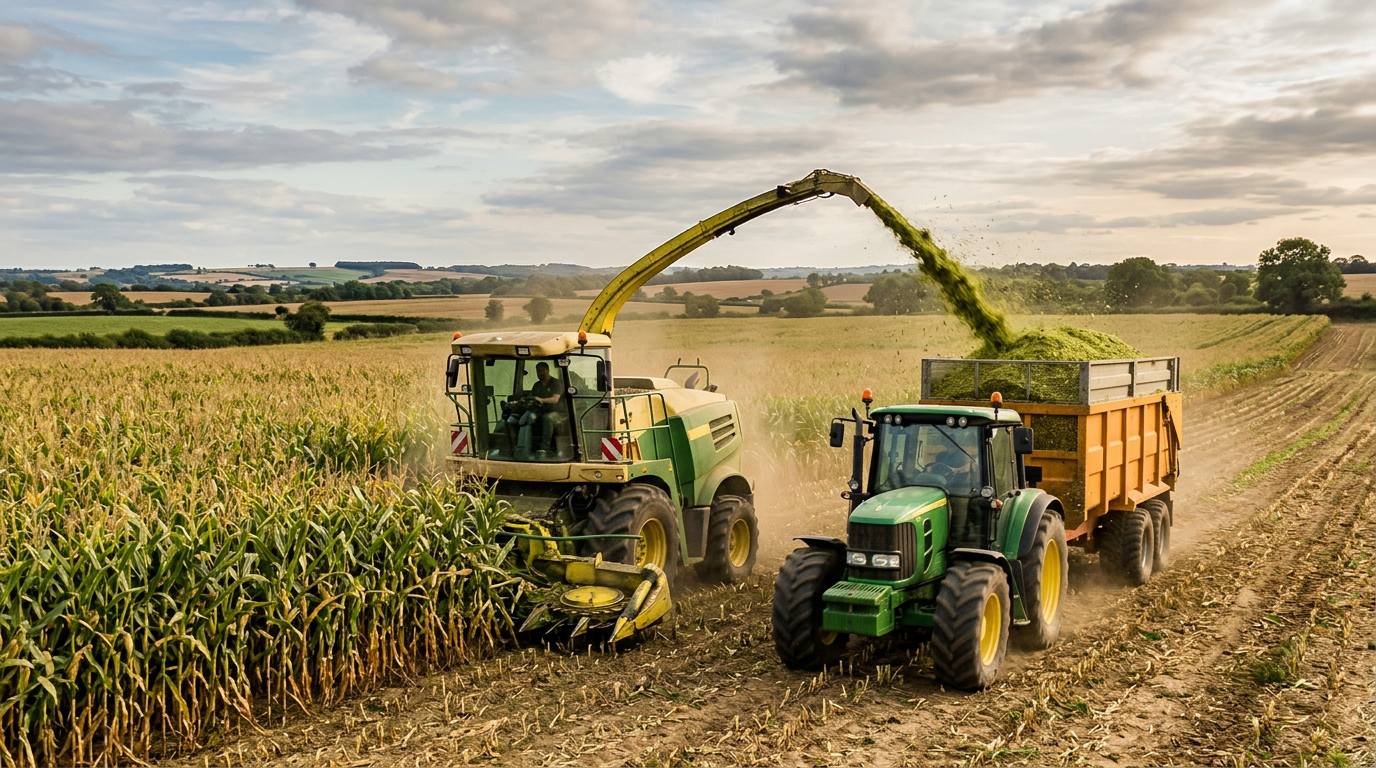
Silage quality starts in the field, and for dairy farms the length of the chop is one of the few things the harvester operator directly controls. Too long and the silage packs poorly in the clamp; too short and cows get less of the fibre they need.
Brightwater's FH800 measures dry matter continuously with a near-infrared sensor in the spout. As the crop gets drier, the harvester shortens the chop so the silage still packs tightly; in wetter patches it lengthens it and saves fuel.
Data follows the load
Each trailer load is tagged with its average dry matter and field position. Contractors can share that record with the farm, which helps nutritionists plan rations before the clamp is opened.
Brightwater says fuel use per tonne fell by up to 8% in trials, because the harvester no longer chops wet crop finer than it needs to.
- Forage
- Sensors
- Harvest